Tuesday, March 28, 2023

A Fruitful Harvest

 By Vida Amor Hequilan, CLM


My family does not own a farm. The only time I was able to experience life on a farm was when my family visited the farm of my uncle who is married to my mother’s younger sister. The farm was filled with rice fields as far as my eyes could see. It also had vegetables and fruit trees. Together with my cousins, we went around the farm riding a carabao (water buffalo). We also walked along the rice paddies and greeted my uncle’s relatives and friends who were working in the fields. Before we went home, we often stopped at the stream for a swim together with the carabao.

I always looked forward to visiting the farm every summer but when I reached high school I stopped going there. Apparently, hanging out with friends was way cooler than spending summer on a farm. I worked with the Indigenous Peoples ministry in the northern part of TaiAn in Miaoli County, Taiwan. The livelihood of the Atayal (tribe) people in the area is farming of produce, mostly fruits such as persimmon, plum, mandarin orange, dragon fruit and peach. This part of Taiwan produces the best oriental persimmon.

One day a fellow lay missionary told me that a parishioner in one of the villages invited us to help her and her family staple paper bags to wrap around the persimmon fruit to keep the bugs away and make harvesting easy. I accepted the invitation because this would be the first time I could experience going to a fruit farm in the area. I was excited and made sure I had everything prepared — working boots, hat, long-sleeve shirt and water bottle container. It was quite a drive going up to the mountain and when I arrived, I was greeted with a spectacular view. Being on top of a plateau overlooking the valley was very exhilarating; I felt being embraced by God’s amazing creation.

Before we started, everyone drank Paolyta, a famous energy drink in Taiwan. After which, we were given the paper bags. Then the own-er of the farm led us in a prayer. Everyone started working in good spirits — there was a lot of chatting, laughter, and even singing. At first, I was embarrassed that I was very slow at wrapping the persimmons, but with their encouragement I was able to find my momentum and found the stapling enjoyable. At the end of the day, I was surprised that I was able to wrap 365 fruits. I helped in the wrapping on three occasions during the stapling season.

During the harvest season, around two months after wrapping the fruit, I was invited to help them out again. I was grateful for the opportunity and felt touched that they trusted me with their fruit. I enjoyed sitting under a persimmon tree with a piece of fruit in my hand looking at the valley during breaks. However, the whole experience of working in the farm — sharing laughter, songs and stories — led me to a deeper understanding of the people in the area, especially the women, most of whom work hard in the fruit farms. After a long day working in their farms, once they arrive home they have to cook for the family and then join the weekly house prayer. I’m amazed by their energy, knowledge of the land, and at the same time their faith in God. That experience taught me to be grateful for the food that I eat and to have a deep appreciation for all the farmers who work all-year round to provide nourishment to everyone. It was a very fruitful harvest and the persimmon that year had never been sweeter.

Sunday, March 26, 2023

ECHOES OF MISSION

 By Ariel Presbitero, RP2, Brasil and Peru


It has been a while since the last time I wrote something that I can share about with the Columbans. I still write in my journal through Daybook App which I find helpful to reflect upon my daily journey in life. Sometimes it is reflective, sometimes it is just a rundown of what happened during the day. But it is not something to share with in writing with other people. I really do appreciate that this initiative started and thanks for the guide questionnaire as a starting point. Please bear with me if my short contribution will be a little scattered because as you may know, being in RP2, is like a long, long time ago, way before the internet, emails and social media. We even experienced sending and receiving Telegram when we were in Plaridel (Misami Occidental) during our parish-based Clinical Pastoral Education (CPE) in our orientation program in 1992. So, you calculate how some of us in our team are now pushing to be senior citizens in a few years. Ageing is real, my friends.

    When I was with the Lay Mission Program, I find writing as an important element of my missionary journey. I write articles to Misyon magazine to share my experiences in Brasil and Peru as a way of giving back because it was through Misyon magazine that I became a Lay Missionary. It gives me joy whenever I revisit those stories that I have written. Stories about people, connections, events and cultural experiences that are so special to me because I became part of it. Like the story in Brasil that I have shared in Misyon, of how people celebrate Good Friday in a different way. The people in Brasil especially the Afro-Brasilians observe this day with so much enthusiasm, a lot of cooking, drinking, loud music and merry-making because people during the colonial time, Afro-Brasilians were freed for only one day, and that is on Good Friday. While the Portuguese colonizers pray during this time of the year, the African slaves were enjoying the freedom to cook food, share drinks and be happy. This tradition lives on until now and I was shocked that I found myself sharing meals and drinking beer with the locals on a Good Friday. How surprising was that during my first year in the mission?

    I remember writing handwritten articles because internet was not even part of our world at the time. The computers already existed. I write a few paragraphs, print it out and mail it. I spend a few dollars for the postal services to send it as well. Aren't we so lucky today that we exchange messages in the comfort of our homes without the hassles of stamps, ink and papers? I remember Marivic Hidalgo was religiously sending us a copy of Philippine Daily Inquirer every week to Brasil. Before it landed on us, two weeks later, it was already history.

    Towards the end of my term in Brasil (1999) we were then able to connect on the internet, via DSL, that made communication and reading news from home a lot easier and convenient.

    I remember doing LAYCOM, the newsletter for the CLM (year 2000) I was already assigned in Peru. I remember creating concepts and organizing my thoughts about it when I was in Cochabamba learning Spanish. I know for the fact that writing articles and encouraging people to write can be challenging. E-mails already existed at the time that I was able to send letter requesting for articles from all LMs all over the world. I produced print copies of the newsletter with the help of our staff in our Sol de Oro office and sent it out by traditional mail. I've done it for a few years and passed the torch to Rowena Cuanico who was gracious and willing to continue LAYCOM.

    Fast forward, I am happy to read the recent CLMs stories published in the Columban website, in the Far East magazine when I was in Australia and the Columban Mission magazine now in the US. I have no doubt that in the years to come, the CLM will continue being an active part of the mission of God's working among the peoples especially the poor and the marginalized. They are all good stories and life-giving. And I hope to read more stories in the future.

    Going back to the writing. The medium of writing may have changed, as I have witnessed it through time, from paper to digital form, but words are the same. Fonts may vary in styles and sizes, but words are the same. It is fascinating how the technology evolves throughout the years. I can imagine if we have Facebook or TikTok during my time in the mission, it can be more interesting to share pictures and videos. I can perhaps share with you all when I was walking in the mud under the rain in the Favelas of Salvador, or when I was walking in the dusty hills of Asentamiento Humano in the periphery of Lima and my annual "Chocolatada" with 300 children during Christmas in Peru. We do not have the technology that we have now during my time as a lay missionary. However, the memories are not forgotten, not because we do not have Instagram or YouTube at the time, but in my heart they stayed. The people who were there present will never forget as well that together we have a common experience; remembering that there was a lay missionary, a Columban and he was coming from a country that they never heard before, the Philippines (people in my community in Brasil think that the Philippines is in the Bible). I feel blessed to have known wonderful people in my life in the farthest corner of this world and will always be grateful for the opportunity that the Columban Lay Mission had given me.

    Eric Weiner stated in his book, "Geography of Bliss," during his search for the meaning of happiness around the world, and he was convinced, that happiness is not personal, it is relational. This is what the Columban Lay Mission, for me, stands for. It is our mission to build a lasting and meaningful relationship with peoples of the world. Yet in this relationship we make a difference. Today, even if I am not with the CLM anymore, I am happy because there is always opportunity to connect, meet and celebrate whenever possible with the Columbans.

REMEMBERING Pilar Tilos

By Fr Liam O'Callaghan, SSC

Pilar Tilos, Columban Lay Missionary in Pakistan, 1990-1996

 
On January 4, 1996, Pilar Tilos died in her sleep in the Columban house in Lahore to the shock of us all. Pilar was born in Negros, Philippines, in 1940 and was very involved with the Columbans there and considered herself a Columban from the beginning. She joined the Columban Lay Mission (CLM) and was one of three of RP1 (first team of lay missionaries from the Philippines) – Emma Pabera and Gloria Canama being the other two – who were sent on mission to Pakistan in 1990.

She was in her second term when she died and she is buried in Buddhu ka Awa graveyard near St. Paul’s parish, Shadbagh, Lahore where Columbans worked from1984 - 2007. 

Pilar worked in Shadbagh parish after language studies until her death, involved in many parish activities but particularly in the women’s group and also in health care. The rented apartment of the lay missionaries was in a Muslim area not far from the Parish Center. Her health work, including acupuncture, allowed her to get to know many of her Muslim women neighbors through her caring, non-threatening and friendly manner, not to mention her medical knowhow. It was only after her death that we fully realized the impact and deep impression she had made on so many. 

Friends say goodbye to Pilar

 
There was a large crowd at her funeral as her death was a major shock in the parish where she had been so well known. Her Muslim neighbors also turned out in big numbers which was very unusual for a Christian funeral. Many cultural norms were broken at the funeral, as Muslim women came to view the body and many women, Christian and Muslim, went in the procession to the graveyard which normally did not happen. Bishop Armando Trinadad was present, as was Fr. Des Quinn, who represented the Columbans in the Philippine Region, and who had also worked with her in Negros. 

Pilar's funeral wends its way through the streets of Lahore

As we remember her on the 27th anniversary of her death, we are reminded by her life and ministry that we are called to be messengers of peace, joy and healing. And in reaching out to others, we can break down barriers and taboos and bring about harmony and understanding. 

May Pilar rest in peace.

Sunday, January 15, 2023

WHEN TWO DIFFERENT ROADS TREAD ON ONE MISSION

A Missionary Meets Miss Universe

By Gertrudes Samson 
Columban Lay Missionary in Britain


Christmas celebration starts early in the Philippines. As the “ber” months kick in, one can already see Christmas decorations in shopping malls and hear Christmas songs playing in the background.

In December 2017 while I was on home holiday, a generous Malate parishioner gave the Columbans several complimentary tickets  to Ballet Philippines “Nutcracker” at the Cultural Center of the Philippines. This was a wonderful surprise and I did not let it pass.

Upon arrival at the main lobby of the Cultural Center of the Philippines, I was delighted to see someone familiar - 1973 Miss Universe Margie Moran. At first, I was a bit shy to go near her but with a little prodding from my fellow lay missionaries, I was able to gather enough courage and I went to say hello. I introduced myself and refreshed a shared memory when we worked for a common cause many years ago. 

I met Miss Margie when I was still working as an architect for the Habitat for Humanity, an ecumenical Christian housing ministry. She was a member of the board of trustees then. We built simple yet affordable and decent houses for the poor and marginalized of the society.  The construction team, volunteers, the future home owners, donors and other partners work together in the actual build. I do remember Miss Margie visiting us at the construction sites and literally working with us at the construction. Whatever task she was given, she always did her best. I do recall a particular home partner proudly saying whenever someone visits her house, “Look at that wall, the joint finish is nicely done and neat. It was done by Miss Margie Moran!” 

It was really nice seeing Miss Margie again after so many years. She is one of those ladies that I admire not only for her beauty but also for her service to humanity. I also learned about her advocacy for peace in Mindanao. She was president of Ballet Philippines for a number of years and their thrust is to bring art through ballet to the communities, which granted us the privilege to watch Nutcracker. With me that night were some young members of the Subaanen indigenous community of Ozamiz who work with Columban Fr. Vinnie Busch.

The ballet show made me look back at the happy memories of my past and I suddenly realized that although I am not a Miss Universe,  I still feel blessed and thankful to God for leading me to become a Missionary. Well at least the first two syllables of MISSIONARY and MISS UNIVERSE sound similar! Being a missionary gives me the honor to continually serve God and humanity, and to be an advocate for justice, integrity of creation, and above all world peace, just like Ms. Margie's advocacy.  Like the contestants of Ms. Universe, we, Columbans, are of different nationalities and on mission in 17 different countries. Likewise, the asylum seekers and refugees I journeyed with in my ministries in Birmingham, England for the past seven years are of more than 100 nationalities from different parts of the world too.

I believe that our MISSION is  whatever role God gives us at a particular point of our life;  whether in the forefront or behind the scenes, big or small, brief or long. We must give it our best shot and with lots of love, for God gave his best shot for us when HE SENT JESUS, His only son, so we can get to know Him as THE GOD OF LOVE. “For God so loved the world that He gave us his one and only Son...” (John 3:16).

Thank you, dear God for the EVERLASTING LOVE and the GREATEST GIFT ever – JESUS, OUR PRINCE OF PEACE!

Wednesday, November 16, 2022

A Faithful Follower of God

 By Reina Mosqueda 
Columban Lay Missionary in Taiwan


When I was young, my family was not religious or active in the parish. My father had a different belief and hated the Catholic faith, especially the priests. My Mom just agreed with my father to avoid conflicts with him. My eight siblings and I were all baptized in the Catholic Church but, as a family, we did not go to church like other Catholic families in our neighborhood. Growing up, I did not have an idea of who Jesus was because we did not talk about it at home. But there is one member in the family who was so brave and courageous in expressing his faith and love in God - my brother Levy.

My brother Levy is the third brother among my six older brothers. Growing up, he was very much aware of the poor financial condition of our family. At a young age, oftentimes after school, he used to go to the farm which is almost two hours walk from our house to get some wood or vegetables to sell and give money to my parents. Until now he is very kind, helpful, hardworking, and responsible.

He was a teenager when he started to get interested in knowing God by going to mass every  Sunday. He liked listening to the homilies of the parish priest and the songs of the choir. He found fulfillment in what he did. He did not feel disappointed even though he was aware that our family was in poverty. The physical hard work he did on the farm became light and full of satisfaction because he knew that God was with him. Even if he was sick, he would go to the farm and work. He did not feel discouraged because he found joy in everything he did. His desire to know God became stronger and stronger every day like his will to follow Him. When he decided to follow God, he did many things to know Him well. He tuned in to the Catholic radio station as a member of the Bible study group, bought spiritual books, joined a charismatic community, and became a catechist in the parish. Through these activities and the formation he received in the church, he developed a deep relationship with God. He saw God as his strength and great provider. He believed that following Him and His teachings would make him inherit His kingdom which is his ultimate goal as a Christian.

However, my father was not happy that my brother Levy was an active member of the church: my father scolded him every time he got drunk. Whenever our father arrived home drunk, even if it was in the middle of the night, he would get a bible and fight with him. Even so, my brother did not fight back and did not hold grudges against our father. Instead, he forgave and prayed for him. His relationship with God shaped his Christian values and character.

“For God so loved the world that he gave his one and only Son, that whoever believes in him shall not perish but have eternal life.” For God did not send his Son into the world to condemn the world, but to save the world through him. (John 3:16-17)

From the early age this Biblical passage became my brother’s great reminder of God’s love for him. His faith led him toward the right path. He desired to become a monk or a religious someday. When he started to search for the true plan of God for him, he was amazed at how God accompanied him throughout his search. He believed that the graces of courage and determination he had during those times of searching for the call of God for him were the manifestations of God’s faithfulness to him. Nevertheless, God had a different plan for my brother Levy. He got an opportunity to study in a Catechetical Center for two years for free on the condition that he would teach in the parish school. And after some years of working in the school as a Religion teacher, he found his future wife in the parish who was also a catechist at that time. When he got married, he studied a four-year course in college majoring in Mathematics. At present, my brother is a public-school elementary teacher. He did not become a monk or a religious but he continues to serve God in his parish together with his own family.

 The fulfilment and deep joy I witnessed in my brother were the reasons why I also desired to follow God. He inspired me to put my faith and trust in God’s divine providence and to learn more about the life and teachings of Jesus so I can also share His great love for His people. I also became a student catechist in high school and took up a course majoring in Religious Education. My brother Levy is one of the significant people in my journey of faith for whom I will always be grateful. God is truly faithful and generous to His people. He gave me my brother Levy who led me to know and love Him. I hope that like my brother, I may lead other people to know God’s great love for them with deep joy and a heart that is fulfilled.

Levy with wife Malou and their son


Wednesday, October 26, 2022

My Vocation Story

The Language of My Heart

By Latai Muller 
Columban Lay Missionary from the Kingdom of Tonga


A vocation is not just something God calls us to do, but also the person God calls us to be. When Jesus summoned his first disciples beside the Sea of Galilee, it was not just to assist him in his ministry but also to alter their lives through his friendship and love. We have been invited to follow Christ, God's son, who became one of us to rescue us for eternal life. He sent his holy spirit for us to share in his divine life and express it by loving him and our neighbors.

I always had the idea of serving God as a missionary and helping those in need when I was younger. I learned to imitate their behaviours by seeing and listening to people when I was a youngster. The same also motivated and inspired me to watch television programs about the lives of those in the margins and to emulate my parents' deeds of kindness, since they frequently welcomed strangers into our homes, fed them, and provided them with a place to stay. My father used to remark, "We never know, maybe the stranger that we helped was Jesus," and as I got older, I realized how deeply ingrained this attitude of giving was in my family.

At the age of 18, I received God's calling in my life through a former Columban lay missionary, Losana Ve'ehala (May she rest in Peace). I was excited to join the Columban Missionary right away, but I was turned down because I was too young then. I was urged to finish my education first and gain work experience. At 23 years old, or after 5 years of waiting, I finished my studies and got myself a job. Even though I had already settled into my career and was already enjoying my life as an active youth in my parish, the idea and desire to be a lay missionary were still very strong.

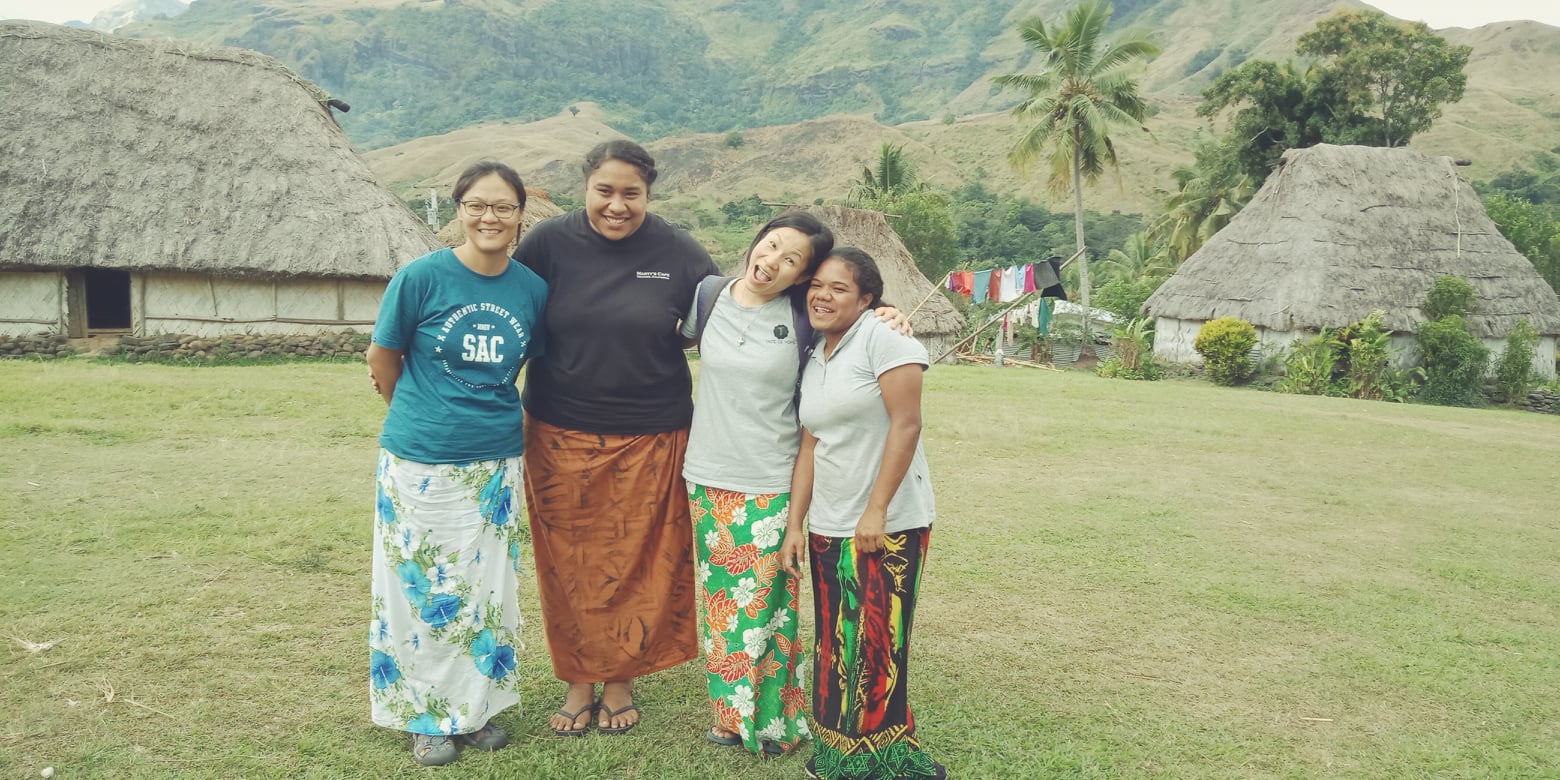
Latai (2nd from left) with her team mates during the orientation program for Columban Lay Missionaries in Fiji

I'll never forget the day I returned to Losana's office. With a huge smile on my face, I said, "Here I am, Lord; I have come to do your will." It was supposed to be hilarious, but it ended with emotional tears. Her expression was priceless because she could not believe I would return after five years of waiting. In 2017, I joined the accompaniment program for Columban Lay Missionaries. Despite that feeling of wanting to give up several times, and the many ups and downs, I persevered.  Discovering that my faith speaks the language of the heart has enabled me to develop my faith and prayer life.

Reflecting back on those five years of waiting, I prayed for a sign, and God gave me the strength to persevere in my desire to be a lay missionary, to wait patiently, and have faith in his perfect timing. Overtime, everything made sense to me. He made me wait because he wanted me to get closer to him and continue his good work. He wanted to shape me into a person who is willing to serve rather than to be served. Ephesians 2:10  “ For we are God’s Handiwork, created in Christ Jesus to do good work, which God prepared in advance for us to do”.

Friday, October 21, 2022

My Vocation Story

 Fanning the Flame of Faith

By Mereani Nailevu 
Columban Lay Missionary from Fiji


  Everyone’s journey is different. When I reflect and think about my own, I realize that I have come a long way from my life as a young girl in my village where technology is not yet a norm. In my village, people visit each to stay in touch and the only means of news was through the radio. At night we gather together with a lamp and old people would tell stories to the young until it was time to go to bed.

    My journey as a lay missionary began when I was asked by our village catechist to visit the sick with him. Although  he was too old to walk by himself to the communities, that did not stop him from ministering to the sick.  Sometimes, we go by horseback which was the only way to reach other villages.  He loved horseback riding and telling stories about his childhood and early adulthood memories on the farm where he grew up in, while I enjoyed listening. Little did I know that from that day forward, I would spend a lot of my childhood accompanying him to the different villages.  It was through him that I came to meet some of the Columban lay missionaries who accompanied the priests whenever there’s a mass in the village. Their stories of struggles and the joys they shared with the people opened their hearts to extend their hands to those in need. After listening, reading and observing the work of the missionaries, accompanying our village catechist to his ministry was no longer something I just do and move on.  I became more intentional with it. When I see the faces of the sick light up upon seeing us, my faith in God is even more strengthened. This value of spreading and living the word of God seared into my heart.  Growing up in that environment taught me a lot about who we are called to be in the body of Christ. Although I felt that my faith journey is an on-going process, I also believed deep within me that I was on the right track.  I have a better understanding of my faith and my God. I believe that God planted a seed of faith in my heart and all I have to do was to water it with my prayers.

    During my last year in my primary school (Class 8), my interest to join the Columban Lay Mission grew.  One of the requirements was a Form 6 pass with good English mark which I thought I could not accomplish because of financial constraints.  So I made up my mind to give up school and help my mom meet the school needs of my younger siblings. But God had other plans for me. With the help and financial support of my parish priest and his family in Limerick, Ireland, I was able to complete my studies and all the requirements to join the accompaniment program for Columban Lay Missionaries. This strengthened my faith and gave me hope to serve His people. So I went to Suva, the capital of Fiji, and met the coordinator of the Columban Lay Missionaries.

Mereani (R) with her team mates during their orientation period

    Moving out from the village and coming to the city for my nine months accompaniment program was not easy. I tried to adjust and fit in with my new environment where the use of technology and gadgets is a normal way of life.  I was surprised to know that people in the neighborhood don’t know each other. I compared my village life with city life but somehow I realized that cities are only dwelling places for hundreds of thousands of working people making it impossible for them to know each other.

    After completing my nine-month accompaniment program, I was asked to wait for two years for a new group because my companions in the accompaniment program did not make it to the end. I patiently waited for another two years while I worked and provided for my family until I was told that the Columban Regions of Fiji, Tonga, Australia and New Zealand have joined to become the new Oceania region.  From this union came three new candidates for lay mission. That’s when I resigned from my work and joined the orientation program (JSOP) for nine months.


Mereani (front) with Columban Missionaries taking the boat to Rabi Island, Fiji for an ordination

    Living and fitting in with a multi-cultural group (Malaysians,  Tongans, Filipinos and Koreans) under one roof was very challenging. I had to come out from my comfort zone to blend in. I had to learn their values, manners, decision making practices, way of communication, and most importantly discover more about myself in the midst of other cultures. Being brought up in a small village, I really didn’t have much knowledge about being in a cross-cultural environment. Everything was new to me even the cooking and eating practices. I remember that during our first community night at the Regional House in Suva, I was told to sit among the priests and use fork and knife to eat. I nervously sat with them as this was my first time to use fork and knife. The culture of “respect” towards the ordained was so strong in me. The most embarrassing moment came when I started digging in my food with the fork and knife and half of my chicken meat flew over to the other side of the table. However, I did not give up. I took my time to learn new ways of doing things and allowed myself to make mistakes and learn from them as I went along. 

     My culture is the very fabric of my being that I cannot separate it from myself. At first I compared everything new to my own culture but this caused misunderstanding and created barriers among my group mates.  While I wanted to preserve my own culture, letting go of some of my own traditions and adapting to a new way was necessary and symbolic as part of the transitions I was going through. Although living with a multi-cultural group was challenging, it has also helped me understand them better and helped me to see my own culture from a different perspective. Despite our differences, we were able to build a bond not only as a team but as a family.  Conversations with someone from a different culture sometimes is difficult but this is normal. Despite this, I have learned that adding humor in our cross-cultural situation makes everyone feel at ease and happy.

    I arrived in the Philippines in February 2020. My more than two years in my mission area in Barra, Opol, Misamis Oriental has not been easy. However, I believe that the Lord has prepared the way for me. I thank the Columbans in my home region for being there for me in times of difficulty. Although I’m already thousands of miles away from home, I still feel the sense of belongingness. I also thank the Columbans in the Philippines for providing programs which helped me broaden my knowledge and use my potential to be God's living witness to His people.

When in Pakistan

  By Monaliza Esteban, CLM I vividly remember my arrival in Pakistan and how the environment felt so different to me. I sensed I had to be c...